What Does "Reversing Diabetes" Actually Mean?
The question "can diabetes be reversed?" is one of the most common — and most misunderstood — questions in modern medicine. The answer requires precision. In 2023, the American Diabetes Association published a consensus report formally defining diabetes remission: an HbA1c below 6.5% sustained for at least 3 months, achieved without glucose-lowering pharmacotherapy. This is the gold standard that guides our practice at Gini Hospital. You can read the full published research from our team on Google Scholar.
The terminology matters. "Reversal" is the lay term — the word patients use when they dream of stopping their medication. "Remission" is what clinicians mean: a measurable, documented return to normal glucose metabolism. "Control," by contrast, means that glucose is well-managed, but with ongoing medication. When Dr. Bhansali speaks about reversal, he always clarifies which goal is realistic for each individual patient. For a 48-year-old who was diagnosed two years ago and has an HbA1c of 7.2, reversal — true medication-free remission — is an achievable, realistic goal. For a 65-year-old who has had diabetes for 22 years, the goal shifts to excellent control with minimal medication, which still delivers profound health benefits.
Why does achieving reversal matter so much? Because the downstream effects of true remission are extraordinary. Patients who achieve and sustain remission dramatically reduce their risk of every major diabetes complication — neuropathy, nephropathy, retinopathy, cardiovascular disease, and diabetic foot disease. They stop spending ₹3,000–8,000 per month on medication. They report transformations in energy, mood, and physical capacity that go far beyond the numbers on a lab report. In Dr. Bhansali's clinical experience across 25,000+ patients, the moment a patient sees their first post-reversal HbA1c — below 6.5%, no medication — is one of the most emotionally significant moments in their lives.
The Science: What Actually Happens Inside Your Body During Reversal
To understand reversal, you need to understand what went wrong in the first place — and why the damage is reversible.
The Vicious Cycle of Type 2 Diabetes
Type 2 diabetes develops through a two-part breakdown:
- Insulin resistance: Your muscle, liver, and fat cells stop responding efficiently to insulin. Your pancreas compensates by producing more and more insulin to move glucose out of the blood.
- Beta cell exhaustion: After years of overproduction, the beta cells in your pancreas — the cells that make insulin — become stressed, inflamed, and progressively less functional. When beta cell capacity finally falls below the threshold needed to manage your glucose, blood sugar rises and stays high. That is Type 2 diabetes.
+ Inactivity
Resistance
Overwork
Sugar (T2D)
+ Exercise
Sensitivity ↑
Rest & Recover
Sugar (Remission)
Figure: The vicious cycle of Type 2 diabetes (top) and how intensive intervention breaks it (bottom). Beta cells that are no longer overworked can recover function — the biological basis for reversal.
Why Beta Cells Can Recover
The key insight from research over the past decade — including landmark studies like DiRECT (UK) and work from Dr. Bhansali's team — is that many beta cells in early-to-mid Type 2 diabetes are not dead. They are exhausted and de-differentiated — they have essentially switched off under the chronic stress of overproduction. When that stress is relieved through:
- Significant caloric restriction reducing glucose load on the pancreas
- Weight loss reducing ectopic fat in the liver and pancreas (pancreatic fat is directly toxic to beta cells)
- Exercise increasing muscle glucose uptake, so the pancreas doesn't need to work as hard
- GLP-1 therapy giving beta cells a direct "rest" by managing post-meal spikes pharmacologically
…beta cells can re-differentiate and recover function. This is the biological basis for diabetes reversal. It is not magic — it is cellular recovery from chronic overload.
Why Duration Matters
The longer diabetes continues without control, the more beta cells undergo irreversible damage — apoptosis (cell death) rather than just exhaustion. This is why:
- Under 5 years: Beta cells largely exhausted but recoverable — best reversal rates
- 5–10 years: Mixed picture — some recovery possible, excellent control achievable
- Over 10 years: Significant beta cell loss — target excellent control, not medication-free remission
The C-peptide test at your initial consultation tells us exactly where your beta cell function sits — giving Dr. Bhansali precise information about what outcome is realistic for you.
Who Can Reverse Type 2 Diabetes?
Not everyone with Type 2 diabetes is equally likely to achieve full reversal — and being honest about this is the foundation of good medicine. Here is how we think about candidacy:
Factors that predict reversal success
- Diabetes duration under 5 years — best reversal rates. Beta cells are still functional and much of the high glucose is driven by reversible insulin resistance.
- HbA1c between 6.5 and 8.5 — more likely to achieve full remission than patients starting at HbA1c above 10.
- Significant excess weight (BMI above 27) — patients who lose 10–15% of body weight almost always see dramatic glucose improvement. Weight loss is one of the most powerful interventions available.
- No advanced complications — early or no nephropathy, retinopathy, or neuropathy means more treatment options and a more straightforward programme.
- Preserved beta cell function (C-peptide test) — this is the most precise predictor. A preserved C-peptide tells us your pancreas can still respond. We run this on every patient entering the reversal pathway.
- Genuine motivation to change diet and exercise — reversal does not happen to you. It is something you achieve with expert support.
Who is less likely to achieve full reversal
- Diabetes duration over 10 years — increasing beta cell loss means the target shifts to excellent control (HbA1c below 7.0 with minimal medication) rather than medication-free remission. This is still a highly valuable goal.
- Very high HbA1c (above 10–11) — a longer road to remission, though excellent control is still achievable.
- Type 1 diabetes — an autoimmune condition, completely different mechanism. Insulin is always required.
- LADA (often misdiagnosed as Type 2) — follows a different trajectory requiring different management.
- Advanced CKD (Stage 4–5) — many standard medications are contraindicated; requires a modified supervised approach.
All of these factors are assessed at your initial consultation. Dr. Bhansali will give you an honest, specific probability of reversal based on your individual picture — not a generic answer.
Dr. Bhansali offers a dedicated reversal assessment consultation — including C-peptide testing and a personalised reversal probability assessment.
The 12-Week Protocol We Use at Gini
The Gini Intensive Diabetes Management (IDM) programme is not a diet plan or a supplement course — it is a medically supervised, data-driven protocol developed from Dr. Bhansali's three decades of clinical research. Here is how it works.
Comprehensive Baseline Assessment
- CGM setup (Continuous Glucose Monitor) — 1,440 glucose readings per day for 2 weeks, showing how your body responds to every meal, activity, sleep, and stress event
- Full metabolic panel: HbA1c, fasting glucose, fasting insulin, C-peptide, lipid profile, kidney function (eGFR + urine ACR), liver enzymes, thyroid function
- Body composition analysis — distinguishes fat mass from lean mass, including visceral and pancreatic fat assessment
- Detailed dietary assessment by our specialist dietitian — 3-day food diary review, eating patterns, cultural food preferences
This two-week phase gives us a far more precise picture of your metabolic state than a standard diabetes clinic review.
Intensive Intervention — Diet, Exercise & Medication
Diet targets:
- Under 100g net carbohydrates/day from low-GI whole foods (vegetables, legumes, nuts, whole grains)
- Refined sugar, white flour, white rice — eliminated or severely restricted
- 500–750 kcal daily deficit through portion control and food quality
- No eating after 8 PM, minimum 12-hour overnight fast
- Mediterranean dietary pattern — strongest evidence base for diabetes remission of any diet studied
Exercise targets:
- 150 minutes/week moderate cardio — brisk walking, cycling, swimming
- 3× weekly resistance training — builds muscle mass, which is the body's largest glucose sink and a critical driver of insulin sensitivity
Medication:
- Many patients on insulin begin dose reductions in weeks 3–5 as glucose improves — a moment of enormous psychological significance
- GLP-1 therapy started where indicated (see next section)
Refinement, Step-Down & Consolidation
- CGM data review — identify residual glucose spikes (often triggered by specific foods, stress, or sleep disruption) and refine protocol
- Medication step-down begins for eligible patients — sulphonylureas first (highest hypoglycaemia risk as glucose improves), then other agents reviewed
- Week 12 repeat panel: HbA1c, fasting glucose, full metabolic review — this is where the transformation becomes visible in numbers
- Patients with optimal baseline characteristics (under 5 years, HbA1c 7.0–8.5, good C-peptide) achieve full remission in 60–70% of cases within 6 months
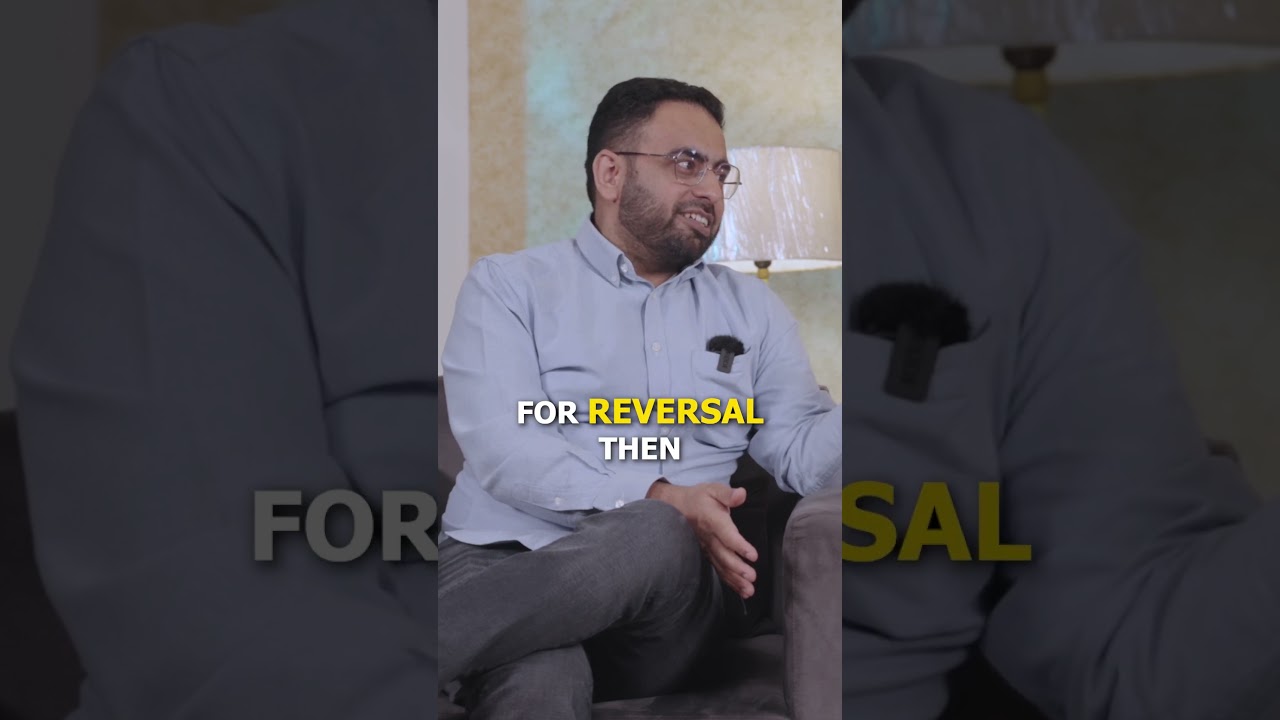
Watch: Dr. Anil Bhansali explains the diabetes reversal programme at Gini Hospital Mohali — click to play
The Role of GLP-1 Therapy in Reversal
GLP-1 therapy — semaglutide (Ozempic/Wegovy) and tirzepatide (Mounjaro) — has fundamentally changed what is achievable in diabetes reversal. These medications work through several complementary mechanisms simultaneously:
- Stimulate insulin secretion in proportion to blood glucose — only when glucose is elevated, which is why hypoglycaemia is rare
- Suppress glucagon — reducing the liver's glucose output between meals
- Slow gastric emptying — flattening post-meal glucose spikes significantly
- Act on brain appetite centres — reducing hunger and caloric intake without willpower battles
- Tirzepatide (Mounjaro) adds GIP dual agonism — amplifying weight loss and adding direct beta cell recovery effects beyond what semaglutide alone achieves
The result: patients lose 10–15% of body weight, see dramatic glucose improvement, and give their beta cells a chance to recover — all at the same time. In our data across 1,200+ patients, GLP-1 therapy added to lifestyle intervention produces an average additional HbA1c reduction of 2–3 points — the difference between 8.5% (high-risk) and 5.8% (non-diabetic range).
Who is a candidate for GLP-1 therapy?
- BMI above 27 — significant weight loss expected to drive glucose improvement
- HbA1c not responding adequately to diet and exercise alone after 4–6 weeks
- Established cardiovascular disease or high CV risk (GLP-1 agents have proven cardiovascular protection)
- Patients specifically targeting full remission who want maximum probability of achieving it
Mounjaro and Wegovy are now available in India. Cost of tirzepatide 5mg weekly: approximately ₹8,000–12,000/month. We discuss cost transparently and never prescribe GLP-1 therapy where lifestyle alone can achieve the goal.
What Happens After Reversal — The Sustain Phase
Achieving remission is not the end of the journey — it is the beginning of a different phase. The underlying metabolic predisposition that allowed Type 2 diabetes to develop in the first place — insulin resistance driven by genetics, body composition, and lifestyle — does not disappear with remission. The beta cells remain vulnerable. Significant weight regain, a return to a high-glycaemic diet, prolonged inactivity, major physical illness, or sustained psychological stress can all trigger a relapse of hyperglycaemia. The biology is clear: remission is a state that must be actively maintained, and the rate of relapse in published studies increases over time without ongoing monitoring and lifestyle discipline. This is not a failure of the treatment — it reflects the chronic nature of the underlying metabolic condition.
At Gini Hospital, we have developed a structured three-stage care model to support patients beyond the initial 12-week programme. Stage 1 — Active Control (Weeks 1–12) — is the intensive intervention phase described above. Stage 2 — Stabilise (Months 3–12) — involves quarterly CGM reviews and HbA1c monitoring, continued dietitian support, and progressive medication step-down for eligible patients. This phase is designed to consolidate remission and identify any early signs of relapse before they become significant. Stage 3 — Sustain (Year 2 and beyond) — provides annual comprehensive metabolic panels, quarterly check-in consultations, and access to the care team via WhatsApp for questions and concerns. The average cost of Stage 3 care is approximately ₹500–800 per quarter — less than the cost of a single hospitalisation for a preventable complication. The maths of prevention are compelling: the average annual cost of uncontrolled diabetes complications in India exceeds ₹80,000. Our three-stage model is not just clinically sound — it is economically rational.
Realistic Expectations — What Dr. Bhansali Tells His Patients
"I tell every patient the same thing at their first consultation: reversal is possible, but it requires your commitment as much as our expertise. The first 12 weeks are the hardest — you will be changing how you eat, how you move, and sometimes how you think about food. After that, most patients find that feeling good becomes its own motivation." — Dr. Anil Bhansali, Director and Chief Endocrinologist, Gini Advanced Care Hospital
For patients presenting early — HbA1c between 6.5 and 8.5, diabetes duration under 5 years, no significant complications — the realistic outcome is excellent. Full remission, meaning HbA1c below 6.5% without medication, is achievable for the majority within 6 months with the complete programme including GLP-1 therapy where appropriate. For patients in the middle tier — HbA1c 8.5–10.0, duration 5–10 years, perhaps one or two managed comorbidities — the realistic outcome is significant improvement and in many cases partial or full remission. Medication burden typically falls dramatically even where full medication-free remission is not reached. For patients with long-standing diabetes of more than 10 years or HbA1c above 10, the honest goal is excellent control — HbA1c below 7.0 — which still delivers profound protection against further complications and often allows meaningful reduction in medication complexity. Dr. Bhansali makes these probabilities explicit at the first consultation, because patients who understand what they are working toward — and why — achieve far better outcomes than those pursuing vague hope.
What does the emotional journey look like? The patients who complete the 12-week programme consistently describe a transformation that goes far beyond their blood tests. Many have carried the weight of their diagnosis for years — the guilt, the sense of failure, the fear of complications. When they see their HbA1c normalise, or receive the first prescription for zero medication, something profound shifts. Patients describe increased energy, better sleep, improved mood, and a relationship with food that has changed from anxiety to agency. These outcomes are not incidental to the clinical programme — they are its purpose. Medicine that only manages numbers without restoring quality of life has missed the point. At Gini Hospital, we measure both.