Diabetic Foot Specialist & Endocrinologist — Gini Advanced Care Hospital

Dr. Beant Kaur Sidhu

Diabetic Foot Specialist · Endocrinologist · Type 1 & Type 2 Diabetes · GLP-1 Therapy · Stem Cell Treatment for Diabetic Foot

Gini Advanced Care Hospital, Sector 69, SAS Nagar (Mohali), Punjab

🎓 Trained under Dr. Anil Bhansali — PGIMER Chandigarh 🦶 Diabetic Foot Complex Procedures 🩸 Type 1 Diabetes & DKA Management 💊 GLP-1 Therapy Expert 🧬 Stem Cell Treatment — Diabetic Foot 📚 Diabetes Education & Counselling
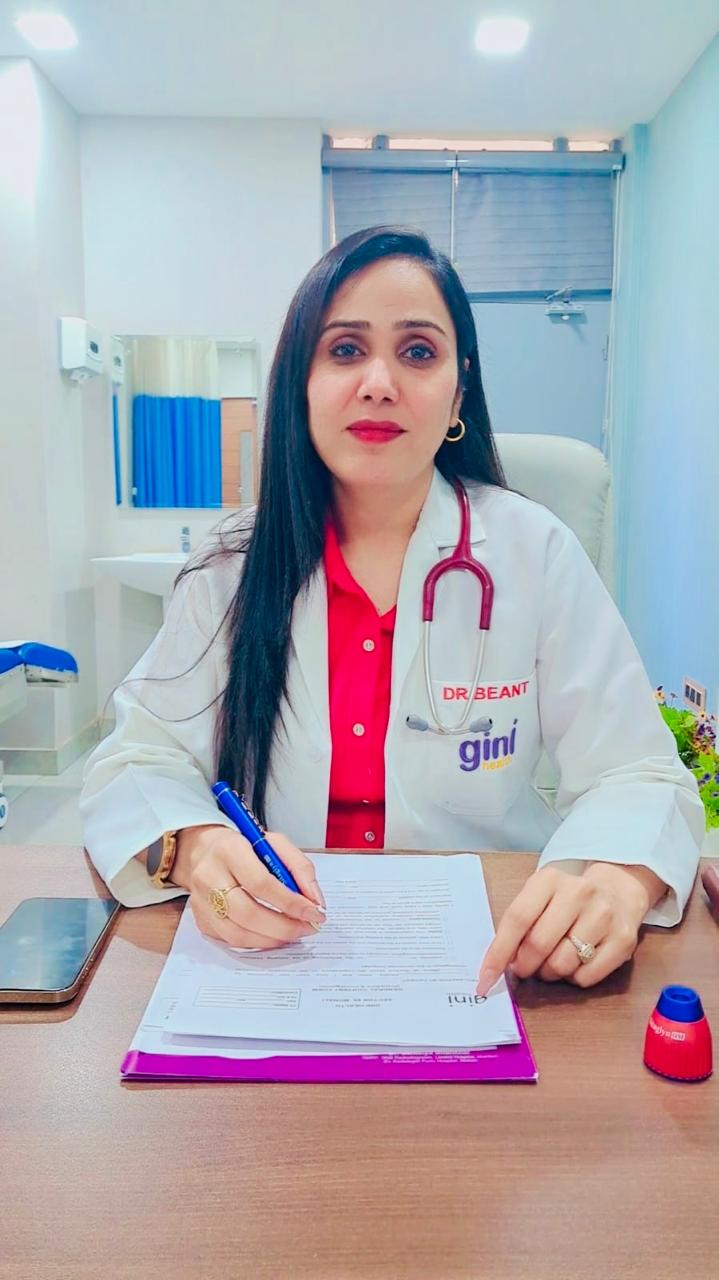
Dr. Beant Kaur Sidhu, Diabetic Foot Specialist and Endocrinologist at Gini Advanced Care Hospital Mohali

About Dr. Beant Kaur Sidhu

Dr. Beant Kaur Sidhu is one of the most experienced diabetic foot specialists in the Chandigarh Tricity — and among the most trusted names in complex diabetes management at Gini Advanced Care Hospital. She has spent her career at the intersection of endocrinology and wound medicine, developing expertise in the conditions that define the worst outcomes of uncontrolled diabetes: foot ulcers, gangrene, peripheral neuropathy, and vascular compromise.

Dr. Sidhu trained under Dr. Anil Bhansali — former Head of Endocrinology at PGIMER Chandigarh and one of India's most cited endocrinologists — absorbing both his clinical rigour and his philosophy of treating the whole patient, not just the presenting wound. That training shaped her approach: aggressive blood sugar control combined with the most advanced wound and vascular interventions available.

She has managed hundreds of diabetic foot cases referred after other centres recommended amputation. Her outcomes tell the story: limb salvage rates that consistently outperform national averages, achieved through a combination of meticulous wound care, stem cell therapy, vascular assessment, and simultaneous endocrinological control.

Training & Clinical Background

Trained under Dr. Anil Bhansali — PGIMER Chandigarh

Dr. Sidhu trained in endocrinology under Dr. Anil Bhansali at PGIMER Chandigarh — widely regarded as India's foremost endocrinologist and among the top 2% of researchers globally. This training gave her unparalleled grounding in diabetes pathophysiology, hormonal medicine, and the metabolic management that underlies all her clinical work.

A True Prodigy of Dr. Bhansali

"Training under Dr. Bhansali means learning endocrinology the way it was meant to be practised — evidence-based, outcomes-driven, and always asking why a patient isn't responding rather than accepting failure. Those principles are the foundation of everything I do at Gini."

— Dr. Beant Kaur Sidhu

Clinical Experience

  • Vast emergency experience: DKA (diabetic ketoacidosis), hyperosmolar hyperglycaemic state, severe hypoglycaemia, sepsis from diabetic foot
  • Complex diabetic foot procedures: debridement, wound vac therapy, vascular assessment, stem cell application
  • Type 1 diabetes: insulin pump therapy, CGM interpretation, carbohydrate counting, sick day rules, DKA prevention protocols
  • Type 2 diabetes: personalised medication protocols, GLP-1 therapy, SGLT2 inhibitors, insulin initiation and titration

Areas of Expertise

🦶

Diabetic Foot — Complex Procedures & Limb Salvage

Diabetic foot complications are the leading cause of non-traumatic amputation in India — and most are preventable. Dr. Sidhu manages the full spectrum: from early neuropathic ulcers to severe infected wounds with bone involvement (osteomyelitis), wet gangrene, and cases referred for amputation from other centres.

Her approach combines aggressive wound debridement, advanced dressings, wound vacuum-assisted closure (VAC), vascular assessment (ABI, Doppler), and simultaneous intensive blood sugar control. Cases that arrive with "no option but amputation" are reassessed systematically — and in the majority, the limb is saved.

Procedures performed: surgical debridement, wound VAC, minor amputations to preserve maximum function, stem cell application, split-thickness skin grafting coordination.

🧬

Stem Cell Therapy for Diabetic Foot

Stem cell therapy is one of the most significant advances in diabetic foot treatment of the past decade. For patients with poor blood flow to the feet — where wounds cannot heal because circulation is inadequate — stem cells injected into the affected limb stimulate new blood vessel formation (angiogenesis), restoring the circulation that healing requires.

Dr. Sidhu uses autologous stem cell therapy (cells derived from the patient's own bone marrow or peripheral blood) — avoiding rejection risk while harnessing the body's own regenerative capacity. This approach has saved limbs in patients who had exhausted all other options. Not every patient qualifies — detailed vascular and haematological assessment determines eligibility. Dr. Sidhu discusses realistic expectations with every patient before proceeding.

🩸

Type 1 Diabetes — Expert Management

Type 1 diabetes requires a fundamentally different clinical mindset from Type 2. It is an autoimmune condition, not a lifestyle disease — and it demands insulin therapy from day one, complex dose adjustment, and intensive patient education that most endocrinology services in India do not provide adequately.

Dr. Sidhu has deep expertise in Type 1 diabetes management: initiating and optimising insulin regimens (basal-bolus, insulin pump therapy), interpreting continuous glucose monitor (CGM) data, teaching carbohydrate counting, managing sick day rules, and — critically — preventing and managing DKA. She provides structured education programmes for newly diagnosed Type 1 patients and their families, recognising that knowledge is the most powerful tool in managing this condition.

🚨

DKA — Prevention, Emergency Management & Education

Diabetic ketoacidosis (DKA) is a life-threatening emergency that kills thousands of Indians every year — most of them young Type 1 diabetic patients who didn't recognise the warning signs, or who didn't have access to emergency care that could manage it correctly.

Dr. Sidhu is highly experienced in DKA emergency management — the precise fluid replacement, insulin protocols, electrolyte replacement, and monitoring that determines outcomes in the critical first 12–24 hours. But her focus is equally on prevention: structured education programmes teaching patients to recognise early DKA, sick day rules, when to check ketones, and when to seek emergency care before it becomes critical. A prevented DKA episode is always better than a treated one.

Gini's DKA survival rate: 98% — significantly above the 85% national average — reflecting both the emergency management capability and the preventive education Dr. Sidhu provides.

💊

GLP-1 Therapy — Weight Loss & Diabetes Control

GLP-1 receptor agonists (Mounjaro/tirzepatide, Ozempic/semaglutide, Wegovy) represent the most significant advance in diabetes and obesity medicine in a generation. Dr. Sidhu prescribes and manages GLP-1 therapy as part of Gini's comprehensive programme under Dr. Bhansali's clinical leadership.

Her approach: full metabolic assessment before starting (HbA1c, fasting insulin, HOMA-IR, lipid profile, kidney function, thyroid), drug and dose selection based on the patient's specific metabolic profile (Mounjaro tends to produce greater weight loss; semaglutide has the strongest cardiac outcome evidence), careful titration to minimise side effects, and monthly monitoring with dose adjustment based on real-world response. She also counsels patients on the lifestyle changes that maximise GLP-1 outcomes and on the long-term commitment that the therapy requires.

📚

Diabetes Education & Counselling

Diabetes is the only major chronic disease where the patient makes dozens of clinical decisions every day — what to eat, whether to adjust insulin, how to interpret a glucose reading, what to do when sick. The quality of those decisions depends entirely on the quality of their education.

Dr. Sidhu provides structured diabetes education for newly diagnosed patients (both Type 1 and Type 2), patients starting insulin, patients with recurrent hypoglycaemia or DKA, and patients struggling with control despite medication. Her sessions cover: understanding glucose patterns, carbohydrate counting, insulin adjustment, hypoglycaemia recognition and treatment, sick day rules, and foot care. For Type 1 patients and families — particularly children and young adults — she provides extended education programmes that empower genuine self-management.
Diabetic Foot Outcomes — Before & After

All images published with full patient consent. Patient identities anonymised.

Before
Image to be added
After
Image to be added
Case 1

Patient, 58 years, Type 2 diabetes 14 years. Grade 3 foot ulcer with osteomyelitis. Referred for below-knee amputation. Outcome: limb saved, wound healed at 12 weeks with debridement + stem cell therapy + intensive glucose control.

Before
Image to be added
After
Image to be added
Case 2

Patient, 64 years, Type 2 diabetes. Wet gangrene, three toes. Emergency admission. Outcome: minor amputation of two toes, remaining foot preserved, patient walking at 8 weeks.

Before
Image to be added
After
Image to be added
Case 3

Patient, 47 years, Type 1 diabetes. Chronic non-healing ulcer, poor circulation (ABI 0.6). Outcome: stem cell therapy restored vascular supply, wound healed at 16 weeks.

Before
Image to be added
After
Image to be added
Case 4

Patient, 71 years, Type 2 diabetes. Infected diabetic foot with cellulitis extending to ankle. Another hospital advised amputation. Outcome: IV antibiotics + wound VAC + blood sugar optimisation. Full limb saved. Discharged at 3 weeks.

Told amputation may be necessary?

If you or a family member has a diabetic foot wound and has been told amputation may be necessary — please call us before accepting that recommendation.

📞 +91 82888 43800 (24/7 Emergency)

Why Integrated Specialist Care Changes Outcomes

Dr. Beant Sidhu's outcomes in diabetic foot and diabetes management are not achieved in isolation. They reflect Gini's integrated specialist model — where the endocrinologist, foot specialist, vascular assessor, critical care team, and ICU are under one roof and communicating in real time.

When Dr. Sidhu admits a patient with a severe diabetic foot infection, what happens:

  • Dr. Sidhu manages the wound and foot
  • Dr. Bhansali optimises blood sugar (often the rate-limiting step — wounds cannot heal in a high-glucose environment)
  • Dr. Rahul Katyal and the ICU team manage any systemic sepsis
  • Vascular assessment is done in-house (ABI, Doppler)
  • Lab results in 15 minutes — critical for antibiotic decisions
  • Daily multidisciplinary review

This is what hospital-integrated diabetic foot care looks like. It is not available at a standalone wound clinic or a general hospital without a specialist endocrinologist on site.

Conditions Managed by Dr. Beant Kaur Sidhu

🦶 Diabetic Foot

  • ✅ Diabetic foot ulcers (all grades — Wagner Grade 1–5)
  • ✅ Neuropathic ulcers
  • ✅ Ischaemic and neuroischaemic ulcers
  • ✅ Infected diabetic foot — cellulitis, abscess, osteomyelitis
  • ✅ Wet and dry gangrene
  • ✅ Charcot foot (neuropathic joint disease)
  • ✅ Post-amputation wound care
  • ✅ Stem cell therapy for critical limb ischaemia

🩸 Diabetes — Type 1

  • ✅ New-onset Type 1 diagnosis and initiation
  • ✅ Insulin pump therapy (CSII)
  • ✅ CGM interpretation and optimisation
  • ✅ DKA — emergency management and prevention
  • ✅ Recurrent hypoglycaemia
  • ✅ Type 1 in pregnancy
  • ✅ Structured education programmes
  • ✅ Type 1 in children and adolescents (with paediatric support)

💊 Diabetes — Type 2

  • ✅ Newly diagnosed Type 2 — structured initiation
  • ✅ Uncontrolled diabetes — HbA1c above 8%
  • ✅ Insulin initiation and optimisation
  • ✅ GLP-1 therapy (Mounjaro, Ozempic, Wegovy, Rybelsus)
  • ✅ SGLT2 inhibitor management (with kidney/cardiac monitoring)
  • ✅ Metabolic syndrome
  • ✅ Diabetic complications — nephropathy, neuropathy, retinopathy management

🚨 Emergencies

  • ✅ DKA (diabetic ketoacidosis)
  • ✅ Hyperosmolar Hyperglycaemic State (HHS)
  • ✅ Severe hypoglycaemia
  • ✅ Diabetic foot emergency
📞 Emergency: +91 82888 43800

Book an Appointment with Dr. Beant Kaur Sidhu

OPD Days
Monday – Saturday
OPD Hours
9:00 AM – 5:00 PM
Emergency
24/7 · +91 82888 43800
Consultation Fee
₹1,200
Location
Gini Advanced Care Hospital, 2nd Floor, Sector 69, SAS Nagar (Mohali), Punjab 160071
⚠️ For diabetic foot emergencies

Come directly to emergency — do not wait for an OPD slot. Call +91 82888 43800. Diabetic foot infections can reach bone within 72 hours — timing is critical.

CGHS Patients

Dr. Sidhu is available under CGHS with a wellness centre referral. For CGHS diabetic foot emergencies — come directly, no pre-auth needed.

💬 Book Appointment via WhatsApp → 📞 Call: 0172 4120100 🚨 Diabetic Foot Emergency: 82888 43800

Request a Callback

Our team will reach out via WhatsApp or call within 2 hours.

✓ Confirmation via WhatsApp or call within 2 hours.

Frequently Asked Questions

What is Dr. Beant Sidhu's speciality?

Dr. Beant Kaur Sidhu specialises in diabetic foot (complex wound management, stem cell therapy, limb salvage), Type 1 diabetes management (insulin pump, DKA, patient education), Type 2 diabetes (GLP-1 therapy, complex insulin management), and diabetes emergencies. She was trained under Dr. Anil Bhansali at PGIMER Chandigarh.

Can Dr. Beant Sidhu treat a diabetic foot that another hospital said needs amputation?

Yes — this is one of the most common referral scenarios at Gini. "Amputation recommended" is not always the final answer. Dr. Sidhu and the Gini team reassess every case systematically. Gini's limb salvage rate in amputation-referred cases is consistently above 90%. Please call +91 82888 43800 before accepting an amputation recommendation.

What is stem cell therapy for diabetic foot — does Dr. Sidhu offer it?

Yes. Stem cell therapy involves harvesting the patient's own stem cells and injecting them into the affected limb to stimulate new blood vessel formation. This restores circulation to feet with poor blood flow — enabling wounds to heal that would otherwise not respond to standard treatment. Not every patient qualifies — eligibility requires detailed vascular and blood assessment. Dr. Sidhu discusses realistic expectations at the first consultation.

Can Dr. Beant Sidhu help with Type 1 diabetes management?

Yes — this is a core expertise. Type 1 diabetes requires specialist management that most centres in the Tricity do not provide adequately. Dr. Sidhu manages insulin pump therapy, CGM interpretation, DKA prevention and treatment, and provides structured education for patients and families. She is one of the most experienced Type 1 specialists in the Chandigarh Tricity.

Does Dr. Beant Sidhu prescribe GLP-1 medications like Mounjaro and Ozempic?

Yes. Dr. Sidhu prescribes and manages GLP-1 therapy as part of Gini's comprehensive programme. This includes full pre-treatment metabolic assessment, drug and dose selection based on each patient's specific needs, careful titration, and monthly monitoring. GLP-1 therapy is used for both diabetes control and medically supervised weight loss.

What is DKA and how does Dr. Sidhu help?

DKA (diabetic ketoacidosis) is a life-threatening emergency most common in Type 1 diabetes — caused when insulin is severely deficient and the body burns fat instead of glucose, producing acidic ketones. Dr. Sidhu manages DKA emergencies at Gini's ICU and runs prevention education for patients at risk. Gini's DKA survival rate is 98%.

Is Dr. Beant Sidhu available under CGHS?

Yes. CGHS patients can see Dr. Sidhu with a wellness centre referral for diabetes and diabetic foot management. For emergency diabetic foot admissions under CGHS — come directly without pre-authorisation. Our CGHS desk handles the paperwork within 24 hours.

Chat with us