✅ 15 Min from Sector 17  ·  FIFA-Approved Surgeon  ·  Zero Infections Recorded  ·  Repair First When Possible

Meniscus Tear Treatment for Chandigarh Patients — FIFA-Approved Surgeon, 15 Minutes Away

Dr. Harjoban Singh is the only FIFA-approved orthopaedic surgeon in the Chandigarh Tricity. When he finds a meniscal tear at arthroscopy, his first question is always: can this be repaired? Not because repair is easier — but because it is better for the patient's long-term knee health. Fifteen minutes from Chandigarh.

📍 Gini Advanced Care Hospital · Sector 69 SAS Nagar (Mohali) · 15 min from Sector 17, 18 min from PGI

🚨 Locked knee or acute injury? Call immediately: +91 82888 43800
💬 WhatsApp Your MRI
15 min
from Sector 17
FIFA
Approved
10,000+
Surgeries
0
Infections
Repair First
Preservation Focus
NABH
Accredited
🩺 Meniscus tear from Chandigarh? First steps:
  1. 1Stop aggravating activities — squatting, twisting, stairs. Continuing worsens the tear pattern.
  2. 2RICE — Rest, Ice (20 min every 2–3 hours), Compression, Elevation. Manage swelling first.
  3. 3Get an MRI — not X-ray — MRI is the definitive tool for meniscal tear diagnosis. X-rays do not show the meniscus.
  4. 415 minutes to Gini Hospital — WhatsApp MRI for free preliminary review. Same-day assessment available.
💬 WhatsApp MRI for free preliminary review

Three Standards That Define Dr. Harjoban Singh's Approach

🏆
Only FIFA-Approved Surgeon in the Chandigarh Tricity
Dr. Harjoban Singh is the only FIFA-approved orthopaedic surgeon in the Chandigarh Tricity. FIFA approval means international standards for treating elite athletes — including specific training in meniscal preservation techniques used at professional football clubs worldwide. These standards are applied to every patient, from professional athletes to active professionals from Chandigarh.
📊
Zero Revision Surgeries. Zero Post-Operative Infections.
Zero revision surgeries recorded. Zero post-operative infections recorded. These are the metrics that matter. In meniscal surgery, the difference between repair and removal — and the quality of the repair technique — determines outcomes that patients live with for decades. Getting it right, every time.
🛡️
Surgery Avoidance First — Always Explored
We explore every non-surgical option before recommending surgery. Small degenerative tears in older patients often respond to physiotherapy and anti-inflammatory treatment. If there is a way to restore function without surgery, we take it. Surgery is recommended only when it is genuinely the correct path for your specific tear and lifestyle.

The FIFA Standard, 15 Minutes from Chandigarh

🏆
FIFA Preservation Techniques
The same meniscal repair techniques used at professional football clubs — applied at Gini Hospital, Sector 69.
🔬
Zero Infections Recorded
Post-operative infection is among the most serious complications in knee surgery. Zero infections recorded — a record built by strict NABH-accredited protocols.
🕐
15 Min from Sector 17
No need to travel to Delhi or Chandigarh hospitals. International standard meniscal surgery 15 minutes from Chandigarh's city centre.
🅿️
Free Parking + Easy Access
Ample free parking at Sector 69 campus. Easy access from Chandigarh via Madhya Marg / NH-5.
🏥
NABH Accredited Hospital
National accreditation for quality and patient safety. In-house MRI, physiotherapy, and orthopaedic ward — all under one roof.
🛡️
CGHS & ECHS Empanelled
Chandigarh government and defence patients — meniscus surgery fully covered. Cashless facility for 32+ private insurance partners.

Repair vs Removal — A Decision With Lifelong Consequences

When a surgeon finds a meniscal tear during arthroscopy, they face a choice: repair the meniscus (preserve it) or remove the damaged part (partial meniscectomy). Removal is faster and easier. Repair is better for the patient long-term — a preserved meniscus reduces arthritis risk by 3–4x over 10 years.

Not all tears can be repaired — blood supply determines healing. The outer third of the meniscus (red zone) has blood supply and heals after repair. The inner two-thirds (white zone) has no blood supply and cannot heal. But every tear should be assessed for repairability before deciding to remove it. Dr. Harjoban Singh's FIFA training specifically covers meniscal preservation techniques. He repairs when it is biologically possible — not just when it is convenient.

Factor Meniscal Repair Partial Meniscectomy
What happens Torn meniscus sutured — tissue preserved Non-repairable torn piece removed
Recovery 4–6 months 6 weeks
Long-term arthritis risk Low — meniscus preserved 3–4x higher over 10 years
Knee replacement risk Significantly lower Accelerated with tissue removed
Dr. Singh's preference First choice when repairable When repair is not biologically possible

Types of Meniscal Tears — Which Do You Have?

The tear type determines whether repair is possible — assessed at MRI and confirmed at arthroscopy.

Bucket Handle Tear
Can Lock Knee — Most Dramatic
Large longitudinal tear that can displace into the joint, locking the knee in flexion. Causes acute disabling locking that prevents full extension. Often repairable in young patients — this is the type where Dr. Harjoban Singh's repair expertise most directly benefits Chandigarh patients.
Radial Tear
Cuts Across the Fibres
Disrupts circumferential fibres, reducing meniscal load-distributing capacity. Repairability depends on size and location. Partial meniscectomy often required for larger radial tears in the avascular zone.
Degenerative Tear
Common in 40s+ — Often Non-Surgical
Gradual wear and fraying — not from a single injury. Very common in patients over 40. Often managed without surgery: physiotherapy, strengthening, anti-inflammatories. Surgery only after failed conservative treatment.
Horizontal Cleavage Tear
Splits Meniscus in Two
Splits into upper and lower leaves. Usually in avascular zone — repair less likely. Partial meniscectomy with maximum tissue preservation is typical. Common in middle-aged patients.
Flap Tear
Catches in the Joint
Unstable flap that catches in the joint, causing painful clicking and locking episodes. Usually requires arthroscopic trimming. Repairability depends on zone location.
Complex / Irreparable Tear
Multiple Planes
Multiple-plane tears, typically deeply avascular. Repair is not biologically possible — partial meniscectomy is performed removing only the minimum tissue needed for a stable meniscal rim.

Do You Have a Meniscal Tear? Symptoms and Diagnosis

Common Symptoms

  • Medial or lateral knee joint-line pain
  • Swelling — 24–48 hours after injury or heavy activity
  • Clicking or popping sensation with knee movement
  • Locking — unable to fully straighten the knee
  • Giving way — knee suddenly buckling
  • Pain during squatting and deep bending
  • Pain descending stairs or slopes

Diagnosis at Gini Hospital

Clinical Examination

McMurray test, Thessaly test (simulated weight-bearing), joint-line tenderness assessment — Dr. Harjoban Singh's clinical examination establishes a strong preliminary impression before imaging.

MRI — Same-Day Available

MRI accurately shows tear location, pattern, and zone (determines repairability). Chandigarh patients can get same-day MRI at Gini Hospital — no external referrals or delays. Bring your existing MRI if you already have one.

Arthroscopy — Gold Standard

The surgeon sees the tear directly and assesses repairability in real time. The preservation decision is made in the moment — which is why choosing a surgeon with repair expertise is critical.

Meniscus Treatment Options for Chandigarh Patients

🏋️

Non-Surgical — Small Degenerative Tears

Small degenerative tears often respond to physiotherapy alone — rest, strengthening, NSAIDs, activity modification. Always the first approach when clinically appropriate. Chandigarh patients can access Gini's in-house physiotherapy team without the surgical step if conservative treatment is the right call.

  • Quadriceps and hamstring strengthening
  • Anti-inflammatory medication
  • Activity modification
  • In-house physiotherapy programme
🪡

Meniscal Repair — Dr. Harjoban's First Choice

For tears in the vascular zone where healing is biologically possible, Dr. Harjoban Singh sutures the tear. FIFA-trained preservation technique. Longer recovery but dramatically better long-term outcomes for Chandigarh patients' knee health.

  • 4–6 months recovery
  • Best long-term outcomes
  • 3–4x lower arthritis risk vs removal
  • Reduces future knee replacement risk
✂️

Partial Meniscectomy — When Repair Is Not Possible

When the tear is irreparable (avascular zone, complex pattern), the minimum necessary tissue is removed to achieve a stable meniscal rim. Faster recovery — 6 weeks — but long-term arthritis risk increases with tissue removed.

  • 6 weeks return to sport
  • Only irreparable tissue removed
  • Long-term arthritis risk increases
  • Minimum resection principle applied

Dr. Harjoban Singh

FIFA-Approved Meniscal Preservation Specialist — 15 minutes from Chandigarh.

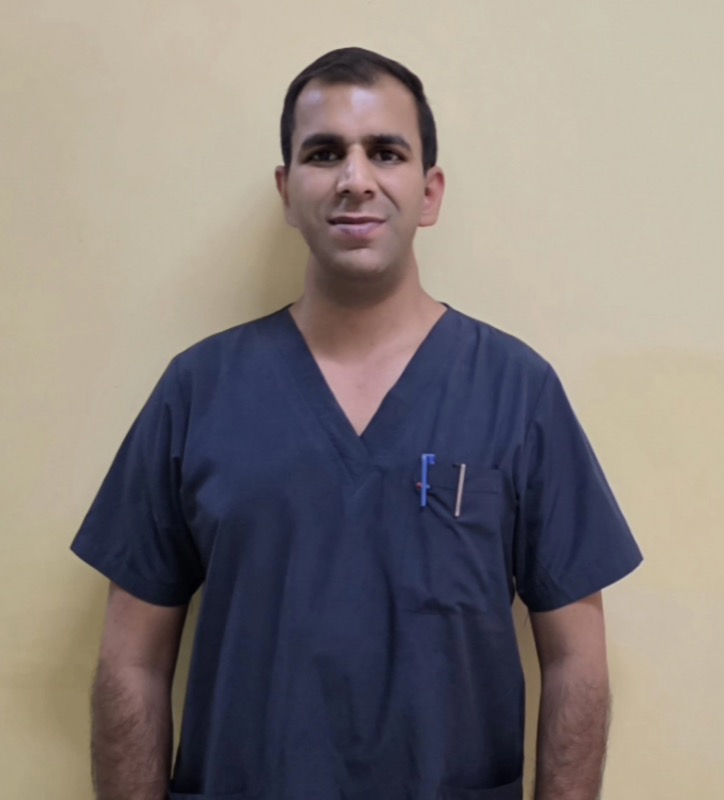
Dr. Harjoban Singh — FIFA-Approved Meniscus Surgery Specialist, Gini Hospital Mohali
Dr. Harjoban Singh
FIFA-Approved Arthroscopic & Sports Medicine Surgeon
MBBS  ·  MS (Orthopaedics)  ·  Fellowship in Arthroscopy & Sports Medicine  ·  FIFA Diploma in Football Medicine (Scotland)
  • Only FIFA-approved orthopaedic surgeon in the Chandigarh Tricity — Scotland-trained, Mohali-based
  • 10,000+ surgeries — zero revision surgeries recorded, zero post-operative infections recorded
  • FIFA training specifically includes advanced meniscal preservation and repair techniques
  • CGHS and ECHS empanelled — Chandigarh government and defence patients fully covered
  • Save the Knee philosophy — preservation of every millimetre of repairable tissue
  • NABH-accredited hospital — quality and safety at every step
"For Chandigarh patients, world-class meniscal surgery is 15 minutes away. No need to travel to Delhi. The FIFA standard, the preservation-first philosophy, the zero-revision record — it is all here at Gini Hospital."
— Dr. Harjoban Singh

Meniscus Surgery Cost Near Chandigarh

Transparent pricing at Gini Hospital — 15 minutes from Chandigarh. Written estimate before any procedure.

ServiceCost
OPD Consultation — Dr. Harjoban Singh₹1,500
Arthroscopic Partial Meniscectomy₹60,000 – ₹80,000
Arthroscopic Meniscal Repair₹80,000 – ₹1,00,000
Post-Op Physiotherapy ProgrammeDiscussed at consultation
MRI Knee (same-day, in-house)Discussed at consultation
CGHS & ECHS Covered: Both meniscal repair and meniscectomy are covered procedures under CGHS and ECHS at Gini Hospital — relevant to Chandigarh-based government employees and defence personnel. Cashless facility for 32+ private insurance partners. Our billing team handles all pre-authorisation. CGHS knee injuries guide →

✅ Cashless facility available  ·  ✅ 32+ insurance partners  ·  ✅ Dedicated insurance coordinator

Meniscus Tear — Questions from Chandigarh Patients

Honest answers from Dr. Harjoban Singh and the Gini orthopaedic team.

Can meniscus heal without surgery near Chandigarh?
Peripheral (outer zone) meniscal tears with blood supply can sometimes heal with rest and physiotherapy — Gini Hospital's in-house physiotherapy team manages this pathway for Chandigarh patients without surgery. Central zone tears cannot heal — there is no blood supply. Mechanical symptoms (locking, clicking, giving way) usually require surgery. WhatsApp your MRI for a preliminary opinion from Dr. Harjoban before making the 15-minute journey to Gini Hospital.
How long is meniscus recovery for Chandigarh patients?
Partial meniscectomy: walking normally within 1–2 weeks, return to sport at 6 weeks. Meniscal repair: walking progresses gradually over 4–6 weeks, return to sport at 4–6 months. The longer recovery for repair reflects the time the sutured tissue needs to biologically heal — and it is worth it for the long-term protection of your knee against arthritis.
Is meniscus surgery painful?
Surgery is performed under spinal anaesthesia — you feel no pain during the procedure. Post-operative pain is managed with oral medications and ice. Most patients describe it as mild to moderate discomfort, improving significantly by Day 3–5. Chandigarh patients typically return home the same day or the following morning under our streamlined discharge protocols.
Does a meniscus tear lead to arthritis?
Partial meniscectomy increases arthritis risk by 3–4x over 10 years compared to meniscal repair — because every centimetre of meniscus removed increases the stress on knee cartilage. An untreated symptomatic tear that continues to cause mechanical damage also accelerates joint deterioration. This is why Dr. Harjoban Singh's preservation-first approach directly protects Chandigarh patients from early knee replacement in the future.
What is the cost of meniscus surgery near Chandigarh?
Meniscus surgery at Gini Hospital (15 minutes from Chandigarh) costs ₹60,000–1,00,000 depending on the procedure. Partial meniscectomy is at the lower end; meniscal repair is higher due to specialised suture equipment. CGHS and ECHS are fully covered for Chandigarh government and defence patients. Written estimate provided at consultation — no hidden charges or post-discharge billing surprises.
Can I walk normally after meniscus surgery?
Yes — both procedures restore normal walking function. After partial meniscectomy: comfortable walking within 1–2 weeks and full normal activities at 4–6 weeks. After meniscal repair: gradual progression over 4–6 weeks with physiotherapy support, and full activity at 4–6 months. The destination is the same — the timeline differs based on procedure type.

Meniscus Tear? The FIFA Standard Is 15 Minutes from Chandigarh

FIFA-approved. Zero infections. Preservation-first philosophy. NABH Accredited. Gini Hospital, Sector 69, Mohali.

📞 Call 0172 4120100
Chat with us